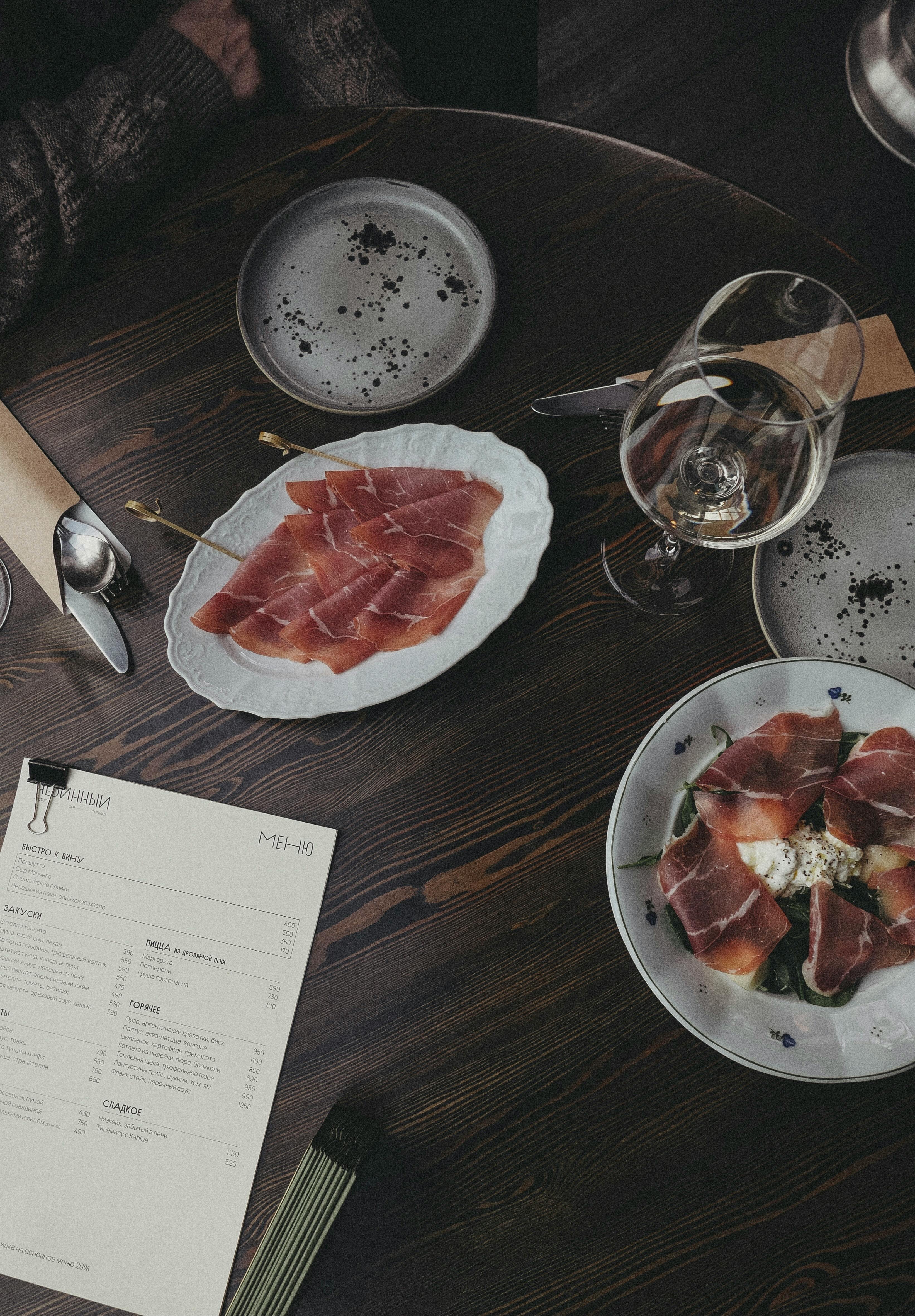
You can book a table online, inspect the menu, check whether the restaurant serves Sunday lunch, investigate the vegetarian options, establish whether the children will eat anything on the menu and, if you're feeling particularly organised, find out whether the restaurant has parking. You can even inspect photographs of the loos, which is more information than most of us ever requested.
But try finding the wine list.
Suddenly, the digital hospitality experience becomes rather mysterious. There may be a photograph of a wine cellar, a sommelier holding a suspiciously expensive Burgundy, or a promise of an expertly curated selection. There may even be a page announcing the restaurant's impressive wine credentials. What you often cannot find is the actual list, complete with bottles and prices.
This is an odd omission. Wine can make a considerable difference to the cost of a meal, yet diners are frequently expected to choose it without knowing what is available until they have arrived, sat down and handed over their coats.
Imagine booking a hotel without being allowed to see the room rates until check-in. Or buying a car without being told the price until you've sat in the driver's seat. Admittedly, wine is not quite as consequential as a mortgage, but the principle is much the same: information is rather useful before you commit to spending money.
So why do restaurants publish their food menus but keep their wine lists under wraps? Is it an administrative nuisance, a commercial strategy, a fear of price comparisons, or simply a hospitality habit that nobody has thought particularly hard about?
The answer, as usual, is more interesting than assuming every restaurant has something to hide.
The evidence suggests it isn't always an accident
There is research on this very question, and it makes for interesting reading.
A study published in the Journal of Wine Economics in 2023, titled To Share or Not to Share: An Analysis of Wine List Disclosure by Swiss Restaurant Owners, examined 811 restaurants featured in the 2021 Swiss edition of the Gault&Millau guide.
The researchers found that 408 restaurants, roughly half the sample, made their wine lists available online. Of those, almost all included prices. The study also found that higher-rated restaurants were less likely to publish their lists, and that restaurants operating in more competitive local markets were less inclined to share their wine information publicly.
These findings concern Swiss restaurants, not British establishments, so they should not be presented as proof that London restaurants behave in precisely the same way. Nevertheless, the research offers a plausible explanation for something diners will recognise: a wine list is not merely a menu. It can be a commercial asset.
A carefully assembled list may contain unusual producers, sought-after vintages, exclusive allocations or wines that a sommelier has spent years sourcing. Publishing it allows customers to discover those wines, but it also allows competitors to inspect the selection, compare prices and potentially source similar bottles.
The researchers' interviews with restaurant professionals revealed this tension between attracting wine enthusiasts and protecting a competitive advantage. In other words, there can be a perfectly legitimate commercial reason for keeping a list private.
But there is a difference between protecting a genuinely distinctive cellar and making it unnecessarily difficult for a prospective customer to find out whether the restaurant serves anything they want to drink.
And that is where the argument becomes more interesting.
Perhaps the wine list is a little too good at keeping people out
Think about the experience of choosing wine in an unfamiliar restaurant. The waiter arrives, the menu lands on the table and somebody asks whether everyone fancies a bottle.
You open the wine list. It contains several pages of unfamiliar producers, regions you vaguely remember from a geography lesson, grape varieties that sound as though they might be prescription medicines and prices that seem to increase rather dramatically as you turn each page. You would quite like something good, you have a budget in mind, and you would prefer not to announce either fact to the entire table.
So you do what many people do. You gravitate towards a familiar grape, ask the waiter for a recommendation, or select something near the bottom of the list that feels financially defensible. Sometimes you choose the second-cheapest bottle because it seems a sensible compromise between economy and quality.
This is not necessarily a failure of the diner. It is a consequence of asking people to make a decision with incomplete information, often in a social setting where nobody wants to look uninformed.
Wine has an image problem. For all the pleasure it can bring to a meal, it can also make people feel that they ought to know more than they do. A food menu generally tells you what a dish contains. A traditional wine list may tell you the producer, appellation, grape variety and vintage, but leave you wondering whether the wine is light or full-bodied, crisp or creamy, fruity or savoury.
Research published in the International Journal of Wine Business Research has explored whether organising wine lists by style rather than geographical origin could improve the selection experience. Research of this kind suggests that the way information is presented matters, although no single format will suit every customer.
The lesson is not that restaurants should abandon traditional wine knowledge. It is that the information can be presented in ways that help customers use it.
Publishing a list online is one step. Making it understandable is another.
The commercial argument for keeping it secret
Let's give restaurants a fair hearing. Running a restaurant is not an inexpensive exercise in feeding people and collecting the compliments. There are staff to pay, premises to maintain, stock to buy, breakages to absorb and customers who sometimes believe a bottle of wine should cost roughly what it does at their local supermarket.
Wine lists also require work. Prices change, vintages sell out, suppliers alter availability and the person responsible for the list may be juggling a hundred other tasks. Keeping an online document accurate alongside the physical list creates another job, and an outdated list can be worse than no list at all if a customer arrives expecting a particular bottle.
Then there is the question of pricing.
Restaurants often buy wine at trade prices and sell it at a considerable premium to retail. That is not, by itself, evidence of profiteering. The restaurant is selling a service and an experience as well as the liquid in the bottle. Its pricing needs to contribute towards the wider costs of hospitality.
However, publishing prices makes comparisons easier. A diner can see whether a bottle is available elsewhere for substantially less, while a competitor can inspect the list and assess its own pricing. Some venues may reasonably decide that the advantages of keeping their selection private outweigh the benefits of putting it online.
The Swiss research suggests these concerns are not imaginary. But it also highlights the other side of the equation: an appealing wine list can be a reason for a customer to choose a restaurant in the first place.
For a venue with a distinctive selection, a strong by-the-glass offer or a reputation for discovering excellent producers, hiding the list may mean hiding one of its best selling points.
What if publishing your wine list actually helped sell more wine?
This is the opportunity I find most interesting.
Imagine choosing a restaurant for an anniversary, a client lunch or a meal with friends who take their wine rather seriously. You can see the food menu, but you cannot establish whether the wine selection suits your taste or budget. You may still book, but you are making the decision without a useful piece of information.
Now imagine the restaurant publishes its list. You can browse the selection, identify a few bottles that appeal, see the prices and arrive with a better idea of what you might order.
For a wine enthusiast, the list itself can be a reason to visit. For a less confident drinker, it can remove some of the anxiety associated with ordering. For the restaurant, it provides an additional opportunity to demonstrate expertise before the customer walks through the door.
There is a further possibility. If the list includes useful descriptions, food-pairing suggestions and clear indications of style, customers may be more willing to explore unfamiliar bottles rather than defaulting to the same grape varieties every time.
We should be careful not to claim that publishing a wine list automatically increases sales. The Swiss study identifies competing incentives, rather than proving that online publication generates a particular increase in revenue. That commercial benefit would need to be tested.
But it is a reasonable opportunity for venues to investigate. If your wine list is one of the things that makes your restaurant special, why should a potential customer have to sit down before discovering it?
This is where SavvySipper comes in
At SavvySipper, we believe diners should be able to make a more informed choice before the waiter returns.
Our platform analyses restaurant wine lists to help customers understand what is on offer, how wines compare with estimated retail prices, how community ratings stack up, whether ordering by the glass makes financial sense and where interesting bottles might be hiding.
The aim is not to tell people that every restaurant markup is unreasonable, nor to encourage everyone to order the cheapest bottle. It is to give diners more useful information, so they can spend confidently and choose wine they are more likely to enjoy.
A restaurant's average markup is only one part of the picture. One bottle may be relatively expensive against retail benchmarks, while another on the same list may represent a particularly attractive choice. Similarly, a venue with an extensive selection may offer exceptional discovery even if it is not the cheapest place to drink.
SavvySipper brings those different considerations together in its SavvyScore, alongside individual wine-list insights. The published scores are algorithmically generated using available wine data, community ratings and estimated retail prices. Those estimates can be imperfect, and lists change, so the figures are intended as useful guidance rather than a guarantee of exact current prices or a calculation of a restaurant's profit.
You can explore the SavvySipper venue directory to see published wine-list results.
For venues, there is a commercial opportunity too. A transparent wine list gives customers another reason to visit, while independent analysis can help a restaurant understand how its selection appears to prospective diners. A strong score can become an additional way to showcase the list; a less impressive result can highlight areas worth reviewing.
Neither outcome requires a restaurant to sell its wine at retail prices. It simply gives the venue and its customers a clearer starting point for the conversation.
A simple challenge to restaurants
Here is my challenge to restaurants, pubs and gastropubs: if you are proud of your wine list, publish it.
It does not need to be an elaborate digital experience. A current PDF, a clearly presented web page or a reliable link to the list is a perfectly good start. Include prices, make the text readable on a mobile phone, and update it when the selection changes. If certain wines are available only in limited quantities, say so.
If your list is genuinely one of your competitive advantages, show people why. If it is a work in progress, publishing it may help you identify where customers need more guidance. And if you are worried about competitors copying it, consider whether the benefit of attracting more informed customers might outweigh that risk.
For diners, the request is equally straightforward: before booking somewhere for a special occasion, look for the wine list as well as the food menu. If it is unavailable, ask whether the venue can share it. You may discover a fantastic selection that makes the decision easy, or you may decide that another restaurant better suits what you want from the evening.
Neither is a bad outcome. It is simply a better-informed one.
The final pour
Restaurants do not all keep their wine lists offline for the same reason. Some are protecting a carefully curated selection; others are dealing with the practical challenge of keeping prices and vintages up to date. Some may simply have never considered the list an essential part of their online presence.
But wine is a meaningful part of the dining experience, and for many customers it is a meaningful part of the bill. Making the list accessible gives diners more confidence, gives wine enthusiasts another reason to visit and gives restaurants an opportunity to show off something they have invested time and expertise in creating.
The answer is not to demand that every restaurant disclose every commercial detail. It is to recognise that a wine list can be both a business asset and a customer-facing invitation.
So, restaurants, show us the wine. We promise not to judge you solely on the price of the Chablis.
Well, not solely.